Predictive Quality – Detect Quality Risks Before They Spread
Turning fragmented quality data into early insights, clear priorities and faster corrective action.

Quality issues rarely originate in a single system. Relevant information is often distributed across production records, warranty claims for customer, workshop reports, telematics and vehicle configurations. Predictive Quality combines these sources in a way to identify emerging patterns, determine potential root causes and initiate effective corrective actions at an early stage.
For a commercial vehicle manufacturer, DATAbility designed, developed and rolled out filytics – an AI-based analytics platform for automated pattern recognition, early detection of quality anomalies and cross-domain root-cause analysis.
Identifying quality deviations and systematic defects is often highly time-consuming due to isolated data silos across various data sources. Much of the relevant information is unstructured and multilingual, making consistent analysis difficult. Conventional KPI systems often reveal field failures only after a considerable delay, resulting in late feedback to production.
At the same time, organizations often lack a systematic approach to identifying hidden cause-and-effect relationships across complex vehicle variants. This makes it difficult to derive effective corrective actions across departments and production sites.
DATAbility addresses these challenges by connecting fragmented data, combining engineering and domain knowledge with AI, and turning emerging quality patterns into actionable insights for earlier, targeted corrective measures.

Production, warranty, telematics and service data form one integrated quality-data foundation.
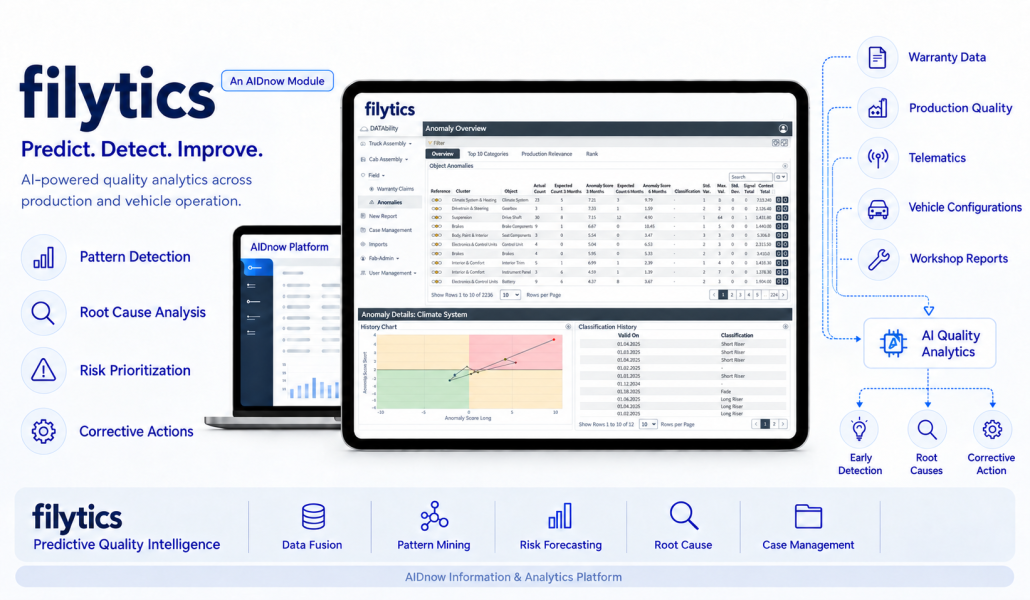
Based on the AIDnow platform, DATAbility developed the filytics module as an integrated quality and analytics pipeline following a Hybrid Engineering approach.
The platform automatically combines heterogeneous information from:
Specialized rule-mining and machine-learning methods continuously analyze these data sources to detect unusual patterns, statistical outliers and emerging quality risks across both production and vehicle operation.
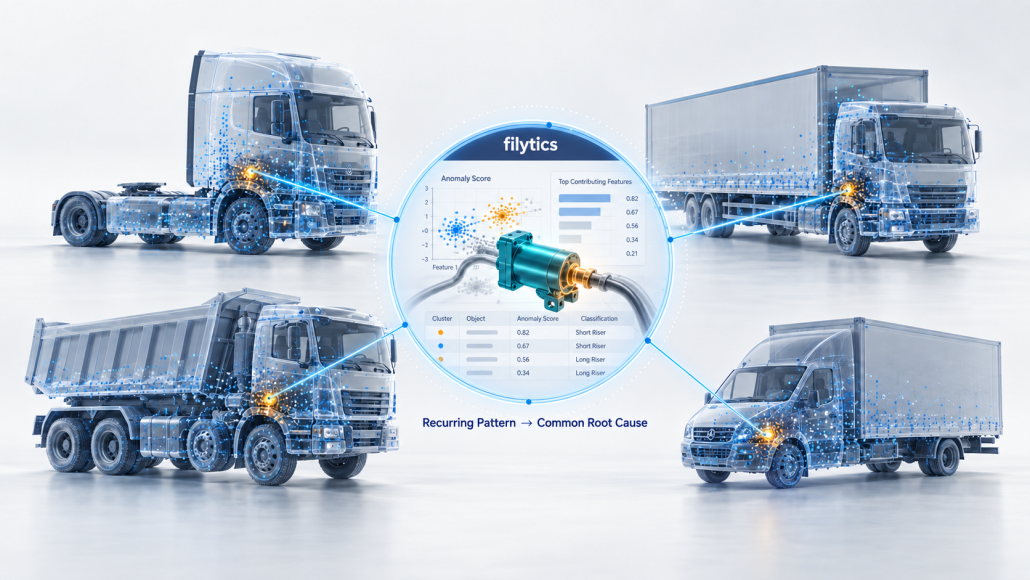
Recurring anomalies across vehicle variants reveal a common root cause.
Customized forecasting models provide short- and long-term estimates and establish scientifically grounded expected values. This enables the system to assess the criticality of detected anomalies and automatically prioritize quality risks – including potential vehicle breakdowns and major defect drivers.
A particular focus lies on issues that may already be relevant to production but unrecognized, especially those affecting recently manufactured vehicles. This allows quality teams to provide earlier feedback to the production plants and initiate corrective measures before problems become widespread.
Modern language models complement the analytical pipeline by processing unstructured and multilingual workshop and damage reports. They help quality engineers and specialist departments to:
The cross-departmental use of filytics significantly improved the speed and consistency of quality analysis.
The platform reduced manual analysis effort in quality management by more than 70% and considerably shortened the time required to initiate effective corrective and containment measures in the production plants.
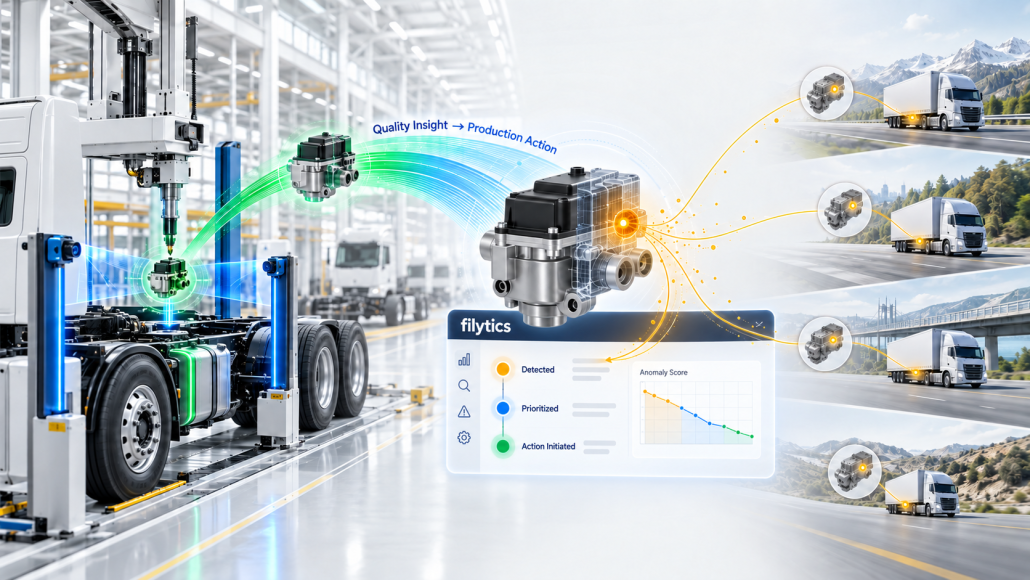
Recurring anomalies across vehicle variants reveal a common root cause.
Connect fragmented quality information, identify emerging risks and turn insight into effective action.

 DispoClean – Dynamic Workforce and Resource Planning